
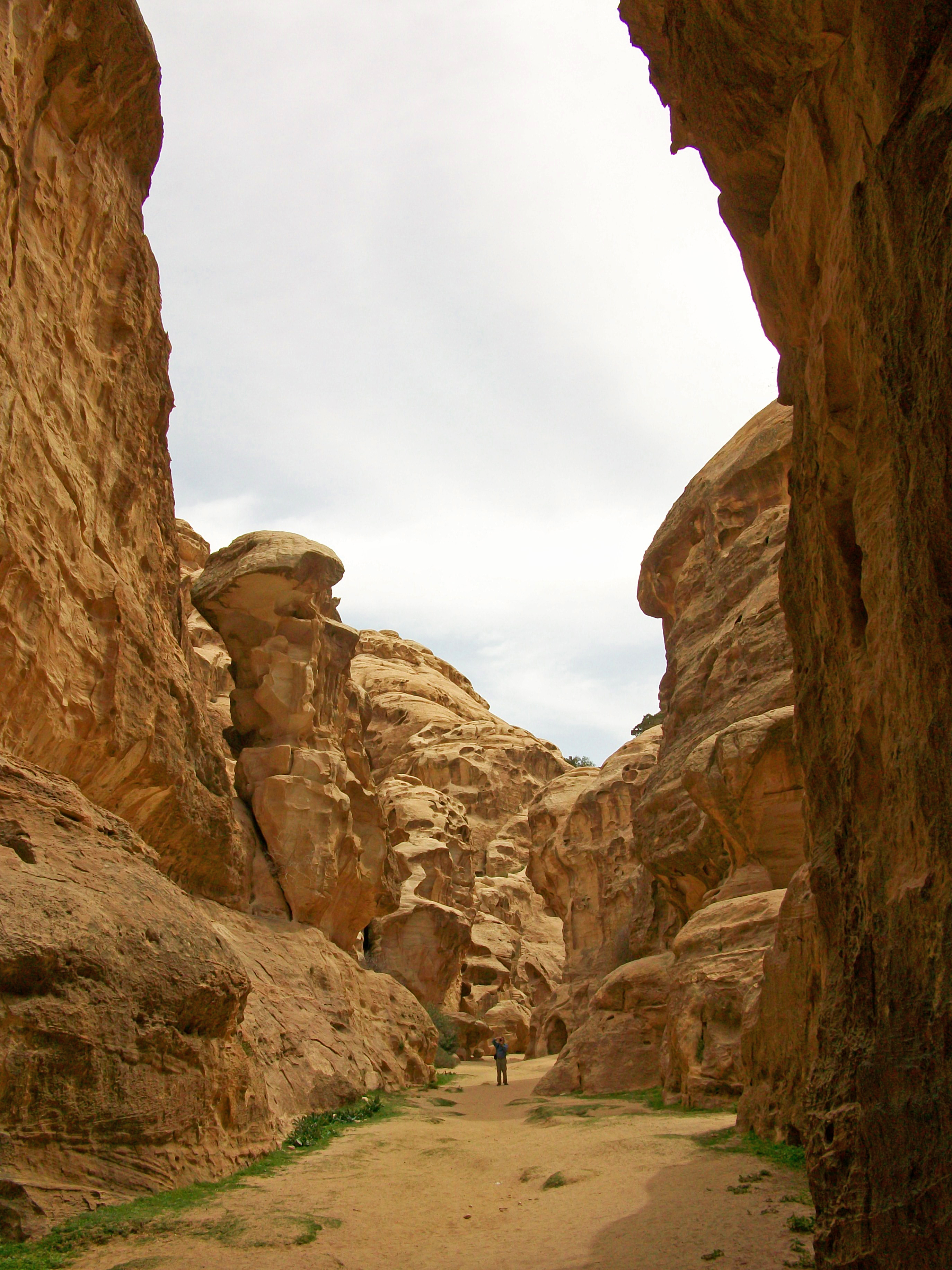
Eight kilometres north of the queue at the Petra Visitor Centre, a 450-metre slot canyon opens onto a Nabataean caravan suburb that almost no one bothers to walk into. The walls are cooler than the main Siq, the carved triclinia are eye-level instead of distant, and the painted ceiling above your head — frescoes of grapes and putti, radiocarbon-dated to the decades around the start of the Common Era — survives because the canyon is too narrow for the sun to bleach them out.
This is Siq al-Barid, "the cold canyon," and it is the part of Petra most travellers miss because it is not in the main park.
1Why visit Little Petra
Little Petra was a Nabataean trading suburb established in the 1st century CE, when the Nabataean culture was at its peak. Scholars believe it was built to house visiting traders working the Silk Road and the incense routes — a kind of caravanserai rather than a residential city.1
For modern visitors, three things make it worth the half-hour detour from the main gate: it is free, it is nearly empty compared to the main park, and it contains the only surviving Nabataean interior frescoes — the Painted Biclinium, photographed in the early 20th century by Père Abel and conserved between 2006 and 2010 by the Petra National Trust and the Courtauld Institute.1
2Getting there + entry
Little Petra is 8 kilometres north of Petra, at an elevation of about 1,040 metres. From Wadi Musa, the easiest options are:
- Taxi. 10–15 minutes each way from Wadi Musa town. Negotiate a round trip with 90 minutes of waiting time — you don't want to be stranded if the driver leaves.
- Rental car. Free parking at the entrance, no permit needed. The road from Wadi Musa to Beidha is paved and signposted.
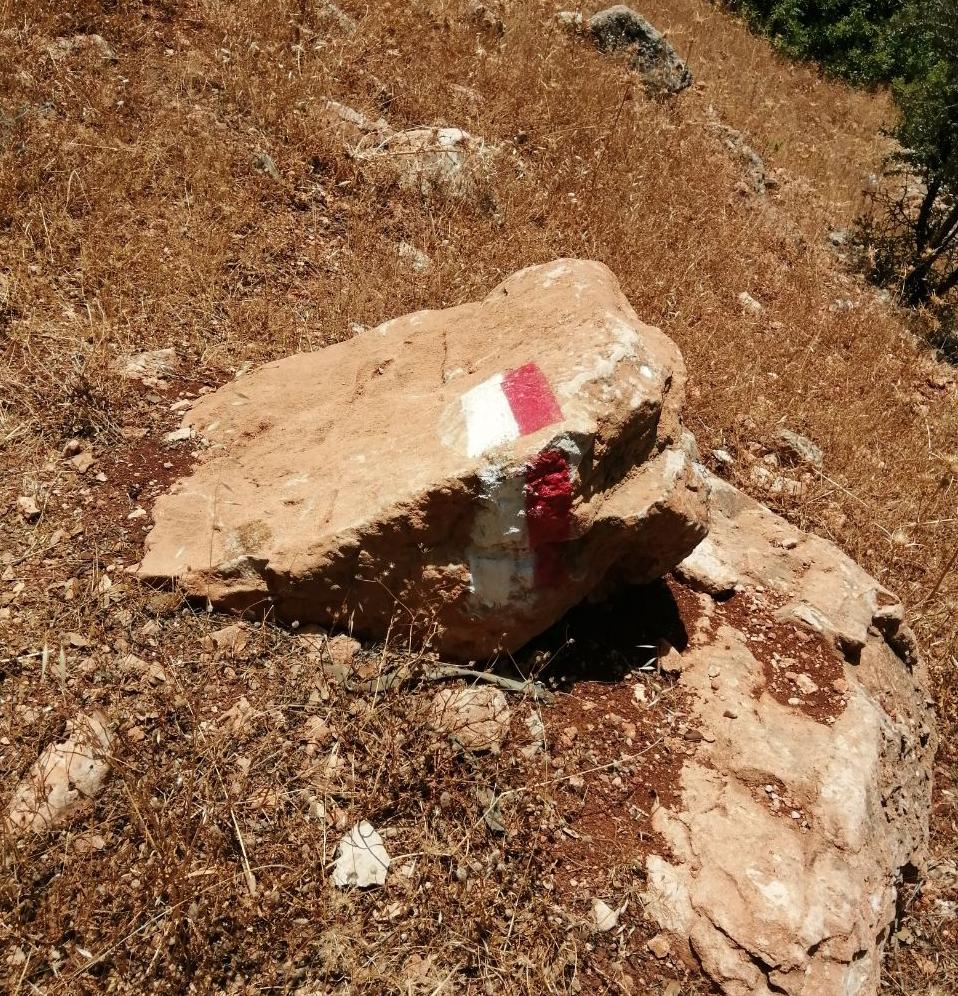
- From Petra back-trail. Experienced hikers can walk the Al-Beidha back-route from Petra (roughly 3–4 hours, signposted). Permit and a PDTRA-licensed guide are recommended for that route.
Crucially, Little Petra does not require an admission ticket and fee as Petra does. It is open during daylight hours and is not policed by ticket scanners. Despite this, it remains within the UNESCO inscribed property of Petra.2
3What to see in the canyon
The Siq itself is the first attraction: 450 metres long, narrowing dramatically after the first 400 metres before tightening again for the final 50. Along the canyon walls you'll see:
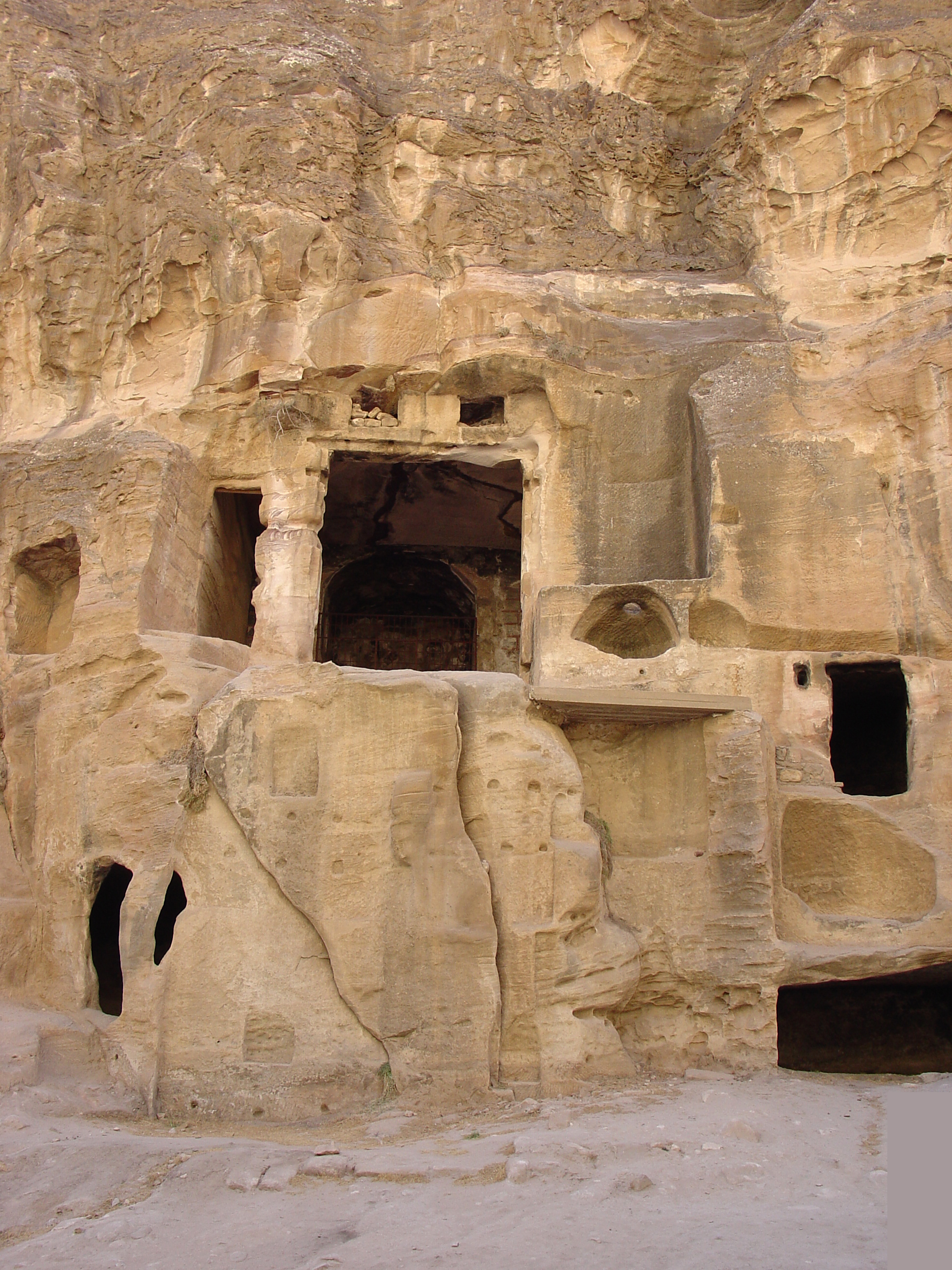
- A colonnaded triclinium with a pedimented portico — the most photographed face of Little Petra (the cover image of this article).
- Four large triclinia — three-couch dining halls cut directly into the rock, used for caravan banquets and possibly funerary feasts.
- The Nabataean cistern system — channels and reservoirs that fed the suburb. The same hydraulic engineering that made Petra possible.
- Multiple carved rock dwellings — smaller spaces, likely lodging for Silk Road traders and their staff.
4The Painted Biclinium — climb the ladder
The single most important thing in Little Petra is reached by climbing a metal ladder to a small chamber halfway down the canyon. Inside is a two-couch banqueting room — a biclinium rather than a triclinium — whose ceiling and upper walls were plastered and painted with grape vines, putti (winged child figures), and floral patterns in a Hellenistic style. Radiocarbon dating places the paintings between 40 BCE and 25 CE. They are the only known surviving Nabataean interior frescoes.1
For solo travellers
Little Petra is the easiest place in the Petra region to be alone. Go in the late afternoon (3–5 pm), bring a flask of mint tea, sit on the carved bench inside the colonnaded triclinium, and let the day quiet down. Local Bedouin tea-stand operators are friendly and will leave you alone if you signal you want quiet.
For couples
Skip the main Petra crowds for sunset and come here instead. The west-facing canyon walls catch the last light beautifully and the place will be effectively empty after 4 pm. Bring a small picnic — there are no restaurants on-site.
For families with kids
Little Petra is more child-friendly than the main park: the canyon is short, level, and self-contained. Kids can climb in and out of the carved triclinia (gently — the sandstone weathers fast). The metal ladder up to the Painted Biclinium is steep; children under six should skip that one.
For adventure travellers
The Al-Beidha back-trail from Petra to Little Petra is roughly 3–4 hours through Nabataean back-country. Hire a PDTRA-licensed Bedouin guide; the trail is signposted but easy to lose, and the views down into Petra from the ridge are some of the best in the park.
Accessibility notes
The main canyon at Little Petra is mostly level dirt and sand, walkable in a sturdy wheelchair with assistance. The Painted Biclinium chamber requires a metal ladder and is not wheelchair-accessible. There is a small parking area at the canyon entrance with no formal accessible parking marking — arrive early.
5Combine with Beidha (Neolithic)
Three hundred metres past the parking area at Little Petra, a footpath leads up to Beidha — a Pre-Pottery Neolithic B village dating to roughly 7,200–6,500 BCE. Excavated by Diana Kirkbride and Brian Byrd, with digs continuing until 1983, Beidha is one of the earliest villages with permanent stone architecture in the Levant. The same Bedouin community that watches over Little Petra also watches over Beidha; the path is unmarked but obvious.1
The site is open and there is no charge. Allow 30–45 minutes to walk the perimeter and the central excavation. Bring water; there is no facility on-site.
6Practical tips
- Best time of day. Late afternoon (3–5 pm) for light, fewer people, and cooler air. Avoid noon in summer; the canyon is shaded but the approach is exposed.
- Footwear. Closed-toe trail shoes — the canyon floor has sand and sharp rock fragments. The Painted Biclinium ladder is metal and can be slippery in dust.
- Water. Bring two litres per person. Tea-stands inside the canyon sell water and mint tea; bring small Jordanian dinar notes.
- Drone. Drone use within the UNESCO Petra property requires a PDTRA permit; permits are rarely issued to tourists. Don't fly without one.
- Currency. Cash only at the tea-stands. ATMs are in Wadi Musa town.
References
Verified by locals: TBD — this article will be reviewed by a PDTRA-licensed Petra-area guide before final publication. Drafted from public-domain and CC sources.

Comments (0)