There is a moment in Wadi Rum, usually around nine o'clock on your first night, when you walk away from the camp's fire-pit, lie on your back on still-warm sandstone, and realise you've never seen this many stars. The Milky Way is not a metaphor here. It is a physical thing — a luminous river thick across the entire sky — and the desert is so quiet that the silence itself feels like a sound.
The desert isn't an activity to tick off; it's a slowing-down. Spend at least one night. Spend two if you can. The rhythm only reveals itself once you stop measuring it.
1Why Wadi Rum is different
Wadi Rum is the second of Jordan's UNESCO World Heritage sites, inscribed in 2011 as a "mixed" property — a category awarded to places of both cultural and natural significance.1 The natural side is the geology: a maze of red and ochre sandstone domes, granite escarpments, and dunes, eroded over hundreds of millions of years into a landscape that looks unlike anywhere else on Earth. The cultural side is human presence — petroglyphs and inscriptions in twelve languages spanning twelve thousand years, from prehistoric hunters to Nabataean caravan-traders to the Bedouin tribes who still live here.
The Western reference point is T.E. Lawrence, who described the place as "vast, echoing and god-like" in Seven Pillars of Wisdom.2 The protected area covers 720 km², most of it accessible only by 4×4 or on foot. The full nomination dossier — geology, archaeology, and management — is documented in the ICOMOS-IUCN advisory body evaluation prepared for the 2011 inscription.7
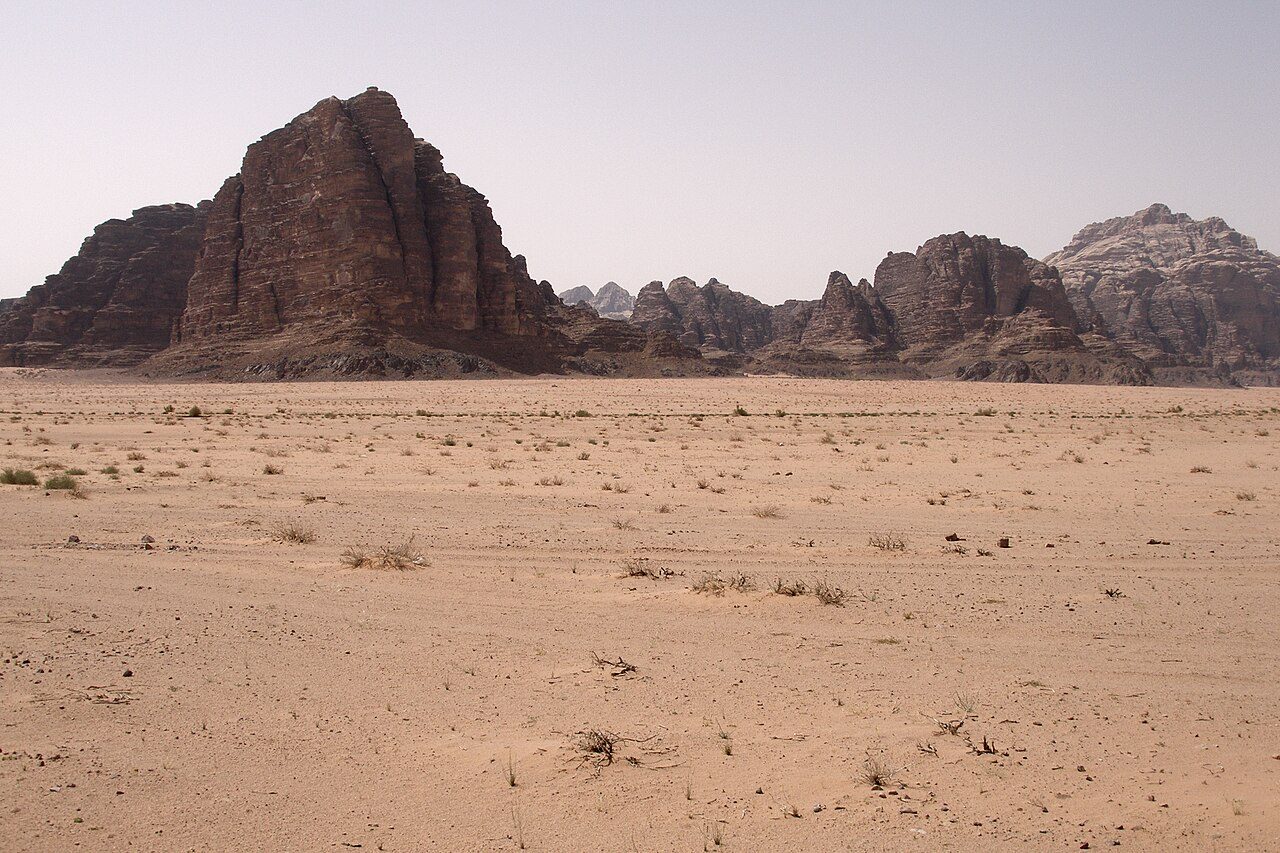
The seven sandstone pillars
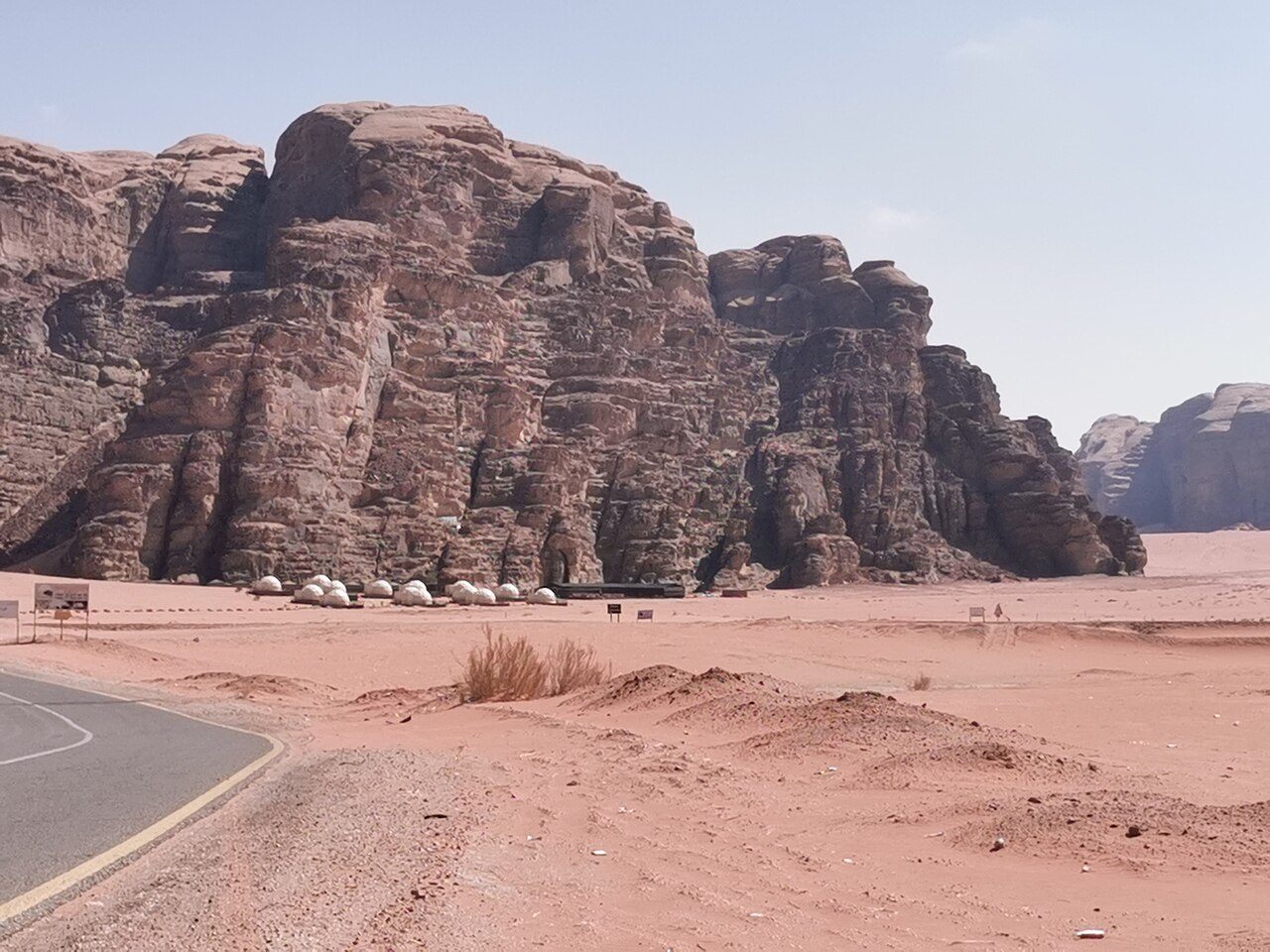
Lawrence took his book's title from these. They're not literally seven pillars — more like a single ridgeline split into seven by erosion. The most photographed view is from the Visitor Centre car park.
Rum Village
Beneath the formation. About 700 Bedouin live here year-round; the modern co-op runs the visitor logistics and the gate to the protected area.
For solo travellers
Wadi Rum is the easiest place in Jordan to find solo trip-mates: camps will buddy you up with other solos for the afternoon 4×4 tour at no extra cost. Most camps include the 4×4 tour, dinner, and a bed in one rate, so solos don't pay group-tour premiums. ActivGate partners flag solo-friendly camps in the inventory below.
For couples
A "bubble tent" — a transparent dome with a roof window over the bed — runs around $200 a night versus $90 for a traditional black goat-hair tent. Worth it once for the stargazing-from-bed experience; otherwise the traditional tent is warmer, quieter, and far more authentic.
For families with kids
Under-fives find the desert long and hot. Wadi Rum is at its best for school-age children and up. Bring snacks, a child-sized headlamp, and a camera. Dinner around the fire, and the moment the stars appear, are universally a hit — and most camps have age-appropriate camel rides in the late afternoon.
For adventure travellers
The Burdah Rock Bridge scramble is the headline. It's the second-tallest natural arch in the world and the last 50 m is exposed sandstone — no ropes, no railings, no margin for error. Hire a Bedouin guide who has done it a hundred times; the local cooperative in Rum Village can match you to one within an hour.
Accessibility notes
Most of Wadi Rum requires 4×4 traverse over sand, and standard wheelchairs do not work on dunes. Some camps offer terrain-capable wheelchair tours by special arrangement; book at least 72 hours ahead via the protected-area visitor centre.4 The visitor centre itself, the on-site museum, and the gate-side café are step-free.
2Choosing a Bedouin camp
Almost every Wadi Rum experience is run by a Bedouin family operating out of a fixed camp. The quality varies sharply, and online photos can be misleading. Three things to ask before you book:
- Is the camp inside the protected area? Camps in the buffer zone outside the gate are usually cheaper, but lose half the silence and most of the stars. Light pollution from Wadi Rum village adds up fast.
- Are the tents traditional or "bubble"? Traditional black goat-hair tents are warmer in winter, more authentic, and — importantly — produce no light pollution. Bubble tents are excellent for honeymoons and bad for serious stargazing.
- Who's cooking? Zarb — meat slow-cooked in a sand-oven for hours — is the dish. If the camp doesn't run zarb at least twice a week, it's serving a tourist menu, not a Bedouin one.
Verify the camp is licensed
Every legitimate camp inside the protected area is licensed by the local Bedouin cooperative and listed at the Wadi Rum Visitor Centre. If a camp can't show its licence, walk away — the unlicensed camps undercut the cooperative and the conservation fee that funds it.
3A 24-hour rhythm
The right way to do Wadi Rum is to surrender to its tempo. A model day, drawn from a dozen first-night arrivals:
Arrive
Drop bags, sweet sage tea while the sun is still hard.
4×4 tour
Khazali Canyon's petroglyphs, Burdah Rock Bridge, dunes at Lawrence's Spring.
Sunset
From a high dune. Bring a layer.
Zarb dinner
Meat slow-cooked in a sand-oven for hours.
Stargaze
Away from camp lights, on your back, in the silence. Stay an hour longer than feels reasonable.
Sunrise
From the same dune. Coffee, then sleep more.
Resist the urge to compress this. Two nights buys you a second sunset and a second sunrise; the desert reads completely differently the second time, when you already know the silhouette of every dune.
4Activities worth your time
Beyond the standard 4×4 tour:
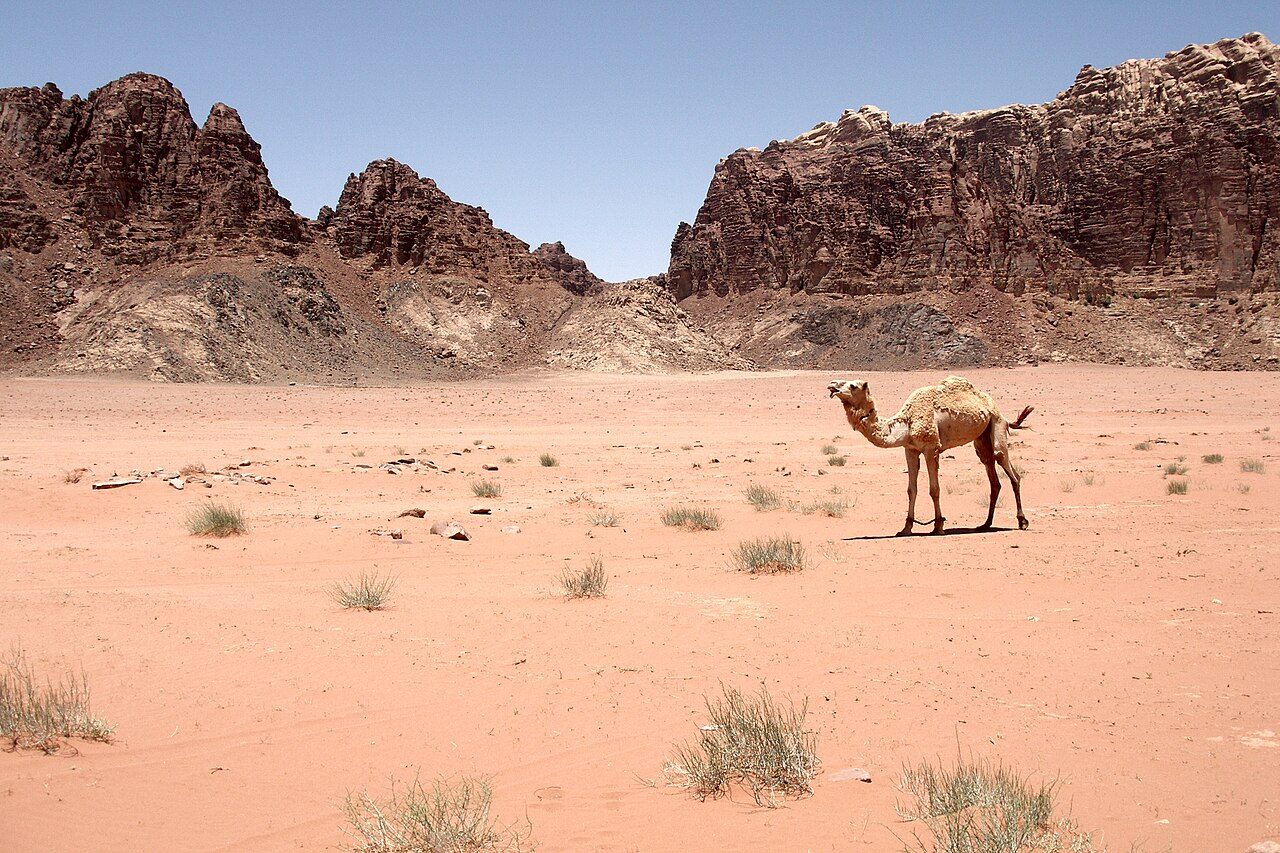
- Camel trek (1–4 hrs). Slow but the most authentic way to feel scale. The four-hour route from Rum Village to Lawrence's Spring lets the landscape unspool at the pace it was designed for.
- Rock-climbing. Wadi Rum has world-class trad climbing, including the iconic Pillar of Wisdom route. Several Bedouin families train and guide; ask the cooperative for a certified climbing guide rather than a 4×4 driver moonlighting.
- Hot-air balloon at sunrise. Expensive (around $200 per person), magical, and books out weeks ahead. The flight crosses the protected area east-to-west; the angle of the rising sun on the sandstone is unrepeatable.3
- Burdah Rock Bridge scramble. The second-tallest natural arch in the world, reachable by an exposed scramble that is not for everyone. Plan three to four hours and a Bedouin guide; do not improvise this on Google Maps.
5The "Mars" claim, fact-checked
You will see Wadi Rum advertised as "Mars on Earth." It is the location for The Martian (2015), Rogue One (2016), and Dune (2021), among others.6 The geology is genuinely Mars-like in places — iron-rich red sandstone over a granite-basalt basement — and NASA's Mars 2020 team used Wadi Rum imagery for terrain calibration in the run-up to the Perseverance rover landing.
So: not pure marketing. The cinema crews are real, the planetary-science work is real, and on a clear noon the colour really does shift toward something an astronaut might recognise. But the place is, simultaneously, a twelve-thousand-year-old human landscape. The Khazali Canyon petroglyphs of ibex and warriors and a woman giving birth, the Nabataean caravan inscriptions, the Bedouin tents whose pole-and-cloth pattern hasn't changed in five generations — none of that survives a Mars analogy. Hold both.
6What to bring
- Headlamp (mandatory). Camps run on a generator that goes off around 11 p.m. The walk back to your tent is unlit, and the path between rocks is genuinely hard to read in starlight alone.
- Warm layer. Desert nights drop near 5 °C even in summer and below freezing in winter. A fleece plus a windproof shell is the minimum; the Bedouin will lend blankets, but only after dinner.
- Three litres of water per person. The 4×4 tour stops at a tea-stand or two, but you'll wish you had more on the longer scrambles. The protected area sells refills at the gate.
- Sunblock and a wide-brimmed hat. The sandstone reflects up as well as down. Lips and ears burn first.
- Modest dress for visiting Bedouin homes. Knees and shoulders covered. The tea-and-conversation invitations are real and worth accepting; dressing the part is a small courtesy that goes a long way.
7Where to stay
Almost everyone sleeps inside the protected area at a Bedouin camp; that is the experience, not a workaround for it. The alternative is a guesthouse beside the Visitor Centre or in Wadi Rum village — useful only if every camp is full, which happens in peak season around the new moon.
Live camp inventory, refreshed nightly from the Wadi Rum cooperative and partner registries listed by the RSCN, appears below.5 Filter by "inside protected area" for the genuine article.
Where to stay near Wadi Rum ↓
8Travel responsibly
Bedouin guides are the local economy here; tip them directly in Jordanian dinars at the end of the day, not in dollars rounded down. A 4×4 driver who has spent six hours showing you Khazali, Burdah, and Lawrence's Spring is doing more than transport — they are passing on a working knowledge of a landscape their grandfather already knew.
Don't give kids candy or pens. It teaches begging in a place where pride in self-sufficiency is the cultural baseline; buy from the women's cooperative shop in Rum Village instead, where the embroidery and silver actually fund the next generation. Pack out every scrap of trash — the wind redistributes plastic across the protected area within a day. No graffiti on the rock inscriptions; they are sometimes two thousand years old and a single Sharpie ruins them. Respect prayer times: if your guide stops the 4×4 to pray, that is not a delay, that is the schedule. The protected-area authority publishes the formal stewardship code on its site.4
References
- UNESCO World Heritage Centre — Wadi Rum Protected Area (Site #1377)
- Britannica — Seven Pillars of Wisdom (T.E. Lawrence)
- Visit Jordan — official tourism board
- ASEZA — Aqaba Special Economic Zone Authority
- Royal Society for the Conservation of Nature (RSCN)
- Lonely Planet — Jordan travel guide
- ICOMOS-IUCN — Wadi Rum Protected Area Advisory Body Evaluation (2011) PDF

Comments (0)