
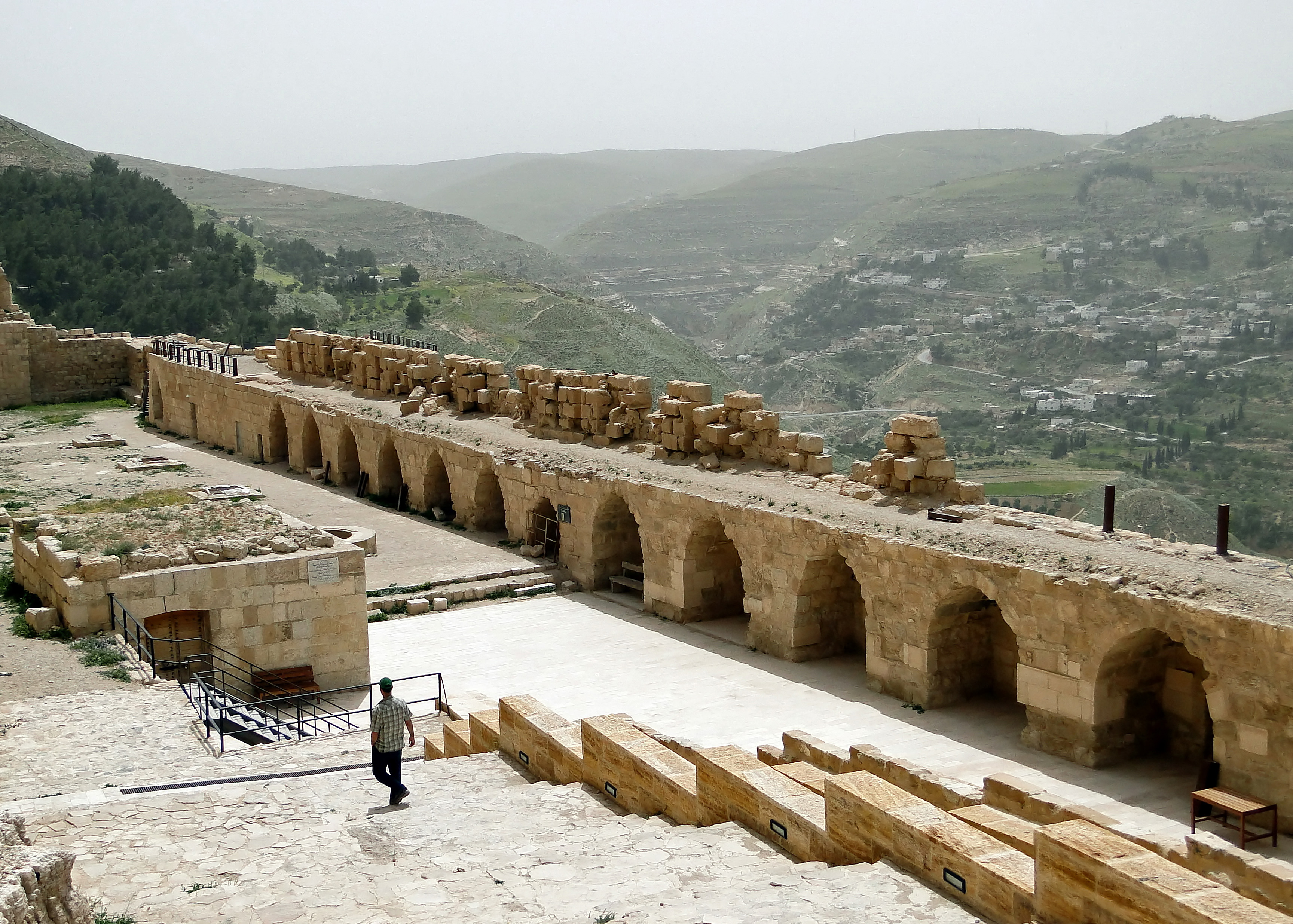
The Crusader castle at Karak sits on a long, narrow ridge above the King's Highway, with sheer drops on three sides and a single neck of access from the modern town. From the highest of its arched halls you can see the Wadi Mujib in one direction and, on a clear day, the Dead Sea in the other. It was built to control the caravan road between Damascus, Jerusalem, and Mecca — and it did, until the man inside became too dangerous even for Saladin to ignore.
Karak is the best preserved Crusader castle in Jordan, and the only one with a Saladin siege story to its name.
1Why visit Karak
Most Crusader castles in the Levant are ruins. Karak is a working space — vaulted galleries you can walk through, refectories with the soot of medieval cooking fires still on the ceilings, an underground passage system that runs the length of the ridge. The combination of survival and brutality of its history (Reynald of Châtillon, who held the castle in the 1180s, "harassed the trade camel trains and even attempted an attack on Mecca itself") makes it one of the most viscerally memorable historical sites in Jordan.1
2The history: 1140s to 1188
Karak was begun in the 1140s under Pagan the Butler and Fulk, King of Jerusalem, as the strategic anchor of the Crusader Lordship of Oultrejordain. Its purpose was to control the trade caravans on the King's Highway between Damascus and the Hijaz — the same roads pilgrims used to reach Mecca.
In 1176, Raynald of Châtillon gained control of Karak by marrying Stephanie of Milly. He used the castle as a raiding base, harassing caravans and famously attempting an attack on Mecca itself. Saladin besieged the castle in 1183 during Humphrey IV's wedding — the wedding party allegedly continued inside while siege engines battered the walls. The siege was relieved by Baldwin IV. A second siege in 1184 lasted four weeks.1
In 1188, Sa'd Al-Din (Saladin's nephew) led a successful siege; the Muslim army cut off supplies to the castle, and Kerak surrendered several months after. Reynald himself had already been executed by Saladin after the Battle of Hattin (1187). The castle passed to Ayyubid and later Mamluk control.
3What to see inside
The castle is a layered architectural document — Crusader volcanic stone in the lower courses, Mamluk and later limestone repairs above. Walk the perimeter wall first to feel the scale, then descend into the interior:
- The vaulted galleries. "Immense arched halls on two levels" served as living quarters, stables, and defensive positions. The lower level is dim — bring a phone torch.
- The refectory. A long, vaulted dining hall with the smoke patterns of medieval cooking fires still visible on the upper stones.
- The Crusader chapel. A small barrel-vaulted space at the southern end — the only chapel that survived the conversion to Islamic use.
- The dungeon and underground passages. Reynald's prisoner-disposal system included throwing captives off the wall into the dry moat. The passages connect to it.
- The Mamluk additions. Look at the lighter-coloured limestone where the repairs were made after 1188 — clearly distinguishable from the dark Crusader basalt.
4Getting there
Al-Karak is on the King's Highway about 130 km south of Amman, halfway to Petra. It's the natural overnight or lunch stop on a 3-day Amman → Petra → Wadi Rum road trip. Options:
- Self-drive. 2 hours from Amman on the Desert Highway + 30 minutes on the King's Highway turn-off; or all the way on the King's Highway (slower, more scenic — 4 hours).
- Day trip from Amman. Doable but tight — better as a stop on a longer road trip. Karak is also the closest castle to the Dead Sea.
- From Petra. 110 km / 1.5 hours north — easy half-day from Wadi Musa.
The Jordan Pass covers Karak Castle entry along with most major sites.2
For solo travellers
Karak is small enough to walk in 90 minutes; combine it with a meal at one of the rooftop restaurants in Karak town. The castle staff are friendly and will often point out details that aren't on the signage.
For couples
Time it for late afternoon — the upper terraces catch sunset light beautifully and the castle is much quieter after 4 pm. Stay overnight in Karak town for sunrise photographs.
For families with kids
The dungeons and underground passages are an immediate hit. Bring a flashlight (a phone torch works). Some passages have low ceilings; keep an eye on heads. Strollers don't work past the gate.
For adventure travellers
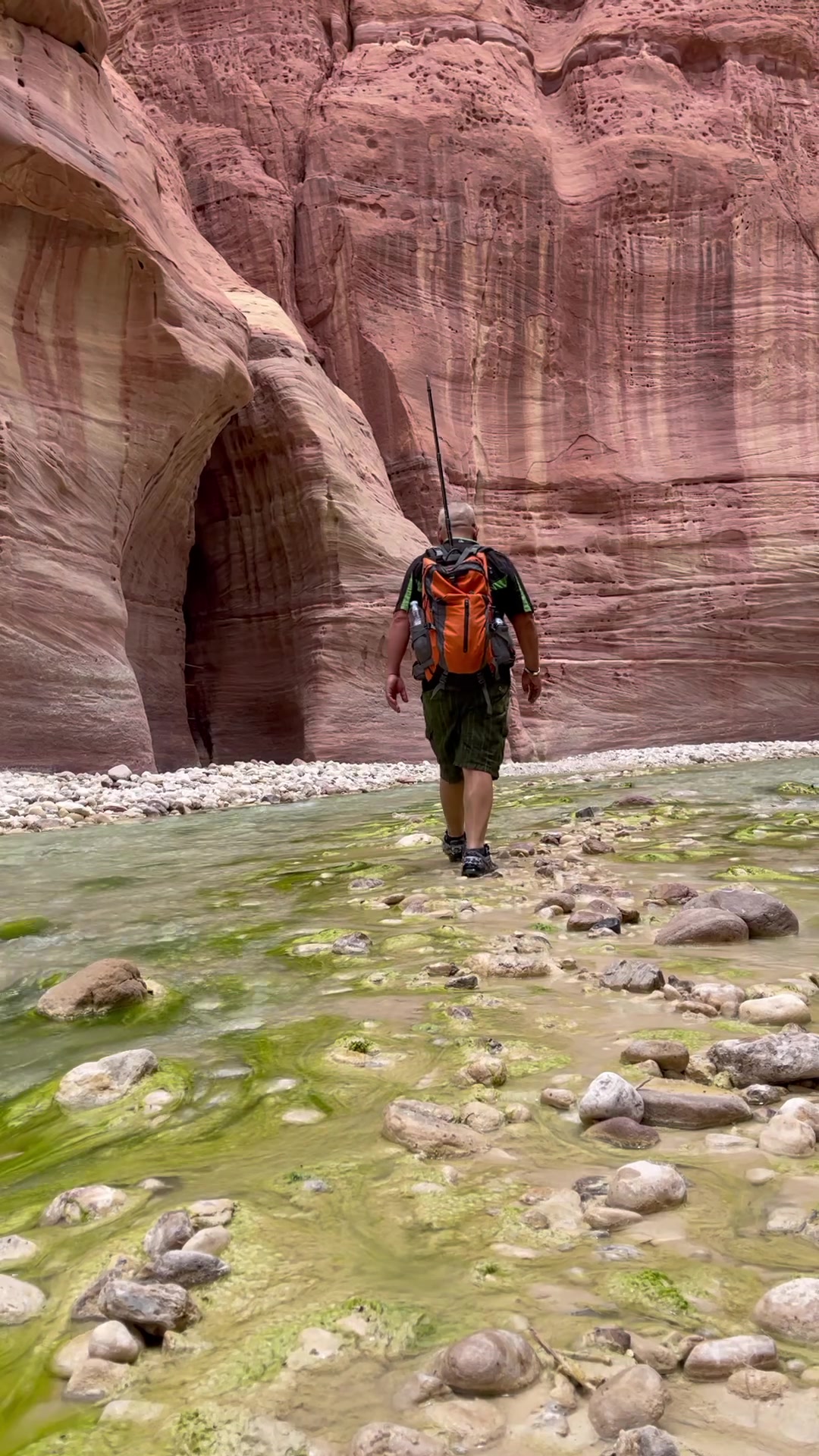
Karak is the natural pivot point on the King's Highway — pair with Wadi Mujib (north) or Dana Biosphere (south) for a 2-day hike-and-castle combination.
Accessibility notes
The main upper courtyard is partially accessible. The vaulted galleries and underground passages require steps and are not wheelchair-friendly. Park near the gate; the approach has a moderate slope.
5Practical tips
- How long. 90 minutes minimum, 2–3 hours for a thorough walk including the dungeon and passages.
- Footwear. Closed-toe shoes — the lower passages have rubble and uneven floors.
- Light source. Phone torch for the underground passages.
- Lunch. Several rooftop restaurants in Karak town overlook the castle. Local mansaf is the regional speciality.
- Combine with. Wadi Mujib (canyon hikes, 60 km north), Dana Biosphere (75 km south), or as a stop on the Amman → Petra road trip.
References
Verified by locals: TBD — this article will be reviewed by a Department of Antiquities-affiliated guide before final publication. Drafted from Wikipedia and the Jordan Pass official site.

Comments (0)