

In the Jordanian eastern desert, on the road between Amman and Azraq, a small Umayyad bath house from the 720s sits intact in the middle of an empty landscape. Built between 723 and 743 CE by Walid Ibn Yazid, who became an Umayyad caliph, Qusayr Amra is the most complete piece of early-Islamic figurative art in the world. The frescoes inside — Six Kings of the world, hunting scenes, naked bathers, a zodiac dome — are the closest you can get to seeing what the Umayyad caliphs actually looked at on a desert weekend. The site is UNESCO-inscribed and free to walk into. Most travellers spend 90 minutes here.1
1Why visit Qusayr Amra
Qusayr Amra is significant in two ways. Architecturally, it's a small but intact Umayyad bath complex — a rare survival from the dynasty that ruled Damascus for less than a hundred years before being overthrown in 750 CE. Artistically, the frescoes inside are the largest body of surviving figurative Umayyad art. Most early-Islamic art is calligraphy and geometric pattern; the Qusayr Amra frescoes show the Umayyads painted humans, animals, and constellations on the walls of their desert pavilions. This complicates the standard story of Islamic art's aniconism in interesting ways.
The site was designated a UNESCO World Heritage Site in 1985 as a masterpiece of human creative genius and outstanding example of early Islamic architecture.1
2The frescoes
Inside the small bath house — three vaulted halls and a dressing room — the walls and ceilings are covered with frescoes. The major panels:
- The Six Kings. A famous panel showing six rulers of the world: rulers from Byzantium, Visigothic Spain, Sassanid Persia, Ethiopia, and China. Captions name them. The panel is the Umayyad caliph's claim to be the equal of the great rulers of the known world.1
- Hunting scenes. Caliph + retinue hunting wild asses, gazelle, and lions. Strong, naturalistic.
- The bathing women. Female figures, partially nude, in the dressing-room panel. The frankness is striking and the fresco's survival is an accident.
- Allegorical figures. Personifications of Victory, History, and Poetry.
- The earliest known depictions of Jonah in Islamic art. A small biblical scene in the dressing room.
3The zodiac dome
The hemispheric dome in the caldarium (hot room) holds the zodiac among 35 separate identifiable constellations. It is the earliest surviving figurative depiction of the celestial sphere from the Islamic world. Sit on the bench, look up at the dome, and you are looking at an 8th-century Umayyad's view of the night sky — Aries, Taurus, the Big Dipper, Orion. The orientation is correct. The constellations are recognisable.1
4Getting there
Qusayr Amra is roughly 85 km from Amman, 21 km southwest of Al-Azraq, on the modern eastern-desert highway.1 Best as a stop on a "Desert Castles" loop:
- Day-trip from Amman. Self-drive 90 minutes east. Combine with Qasr Kharana (15 km west) and Qasr Azraq (20 km northeast) for a full Eastern Desert castles day.
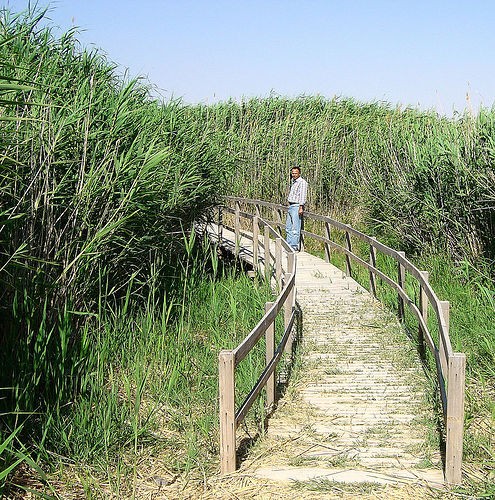
- From Azraq. 25 minutes by car. Combine with the Azraq Wetland Reserve.
For solo travellers
Self-drive or hire a driver-for-the-day to see all three desert castles in a single trip. Qusayr Amra is the highlight; allow 90 minutes here.
For couples
Late afternoon for the bath house in golden light through the small windows; the frescoes warm in colour.
For families with kids
The Six Kings panel can be a quiz — find each ruler. The zodiac dome is an interactive moment if you've prepared kids with a constellation chart.
For adventure travellers
Self-drive the full Desert Castles loop: Amman → Qasr Hallabat → Qasr Amra → Qasr Kharana → Qasr Azraq → Amman. 8-hour day, ~280 km of driving, all 5 sites.
Accessibility notes
The bath house is single-storey with step-free entry from the parking. The interior floors are uneven. The Visitor Centre is accessible.
5Practical tips
- Tickets. A few JD; covered by the Jordan Pass.2
- How long. 60–90 minutes here; 4–5 hours for the full Desert Castles loop.
- Best time of day. Late afternoon — the small windows let in slanting light that animates the frescoes.
- Photography. Permitted without flash. Some areas are roped off; respect the conservation barriers.
- Combine with. Qasr Kharana (15 km west, simpler caravanserai) and Qasr Azraq (20 km northeast, T.E. Lawrence's headquarters in 1917).
References
Verified by locals: TBD — this article will be reviewed by a Department of Antiquities-affiliated archaeologist before final publication. Drafted from Wikipedia.

Comments (0)